
This DDS VFO is a complete digital VFO for homebrew rigs, designed and built around 2013–14 by Shaji P.B., VU2WJ (then VU3WIJ), of Kozhikode. A PIC16F877A microcontroller drives an AD9850 or AD9851 DDS chip — and every setting, even the DDS chip type and the reference clock, can be changed from the setup menu after the PIC has been programmed.
- VFO A / Bdual VFO with A = B
- 50receive-frequency memories
- 1 Hz – MHzselectable tuning steps
- 1.5–30 MHz10 switched RX band-pass filters
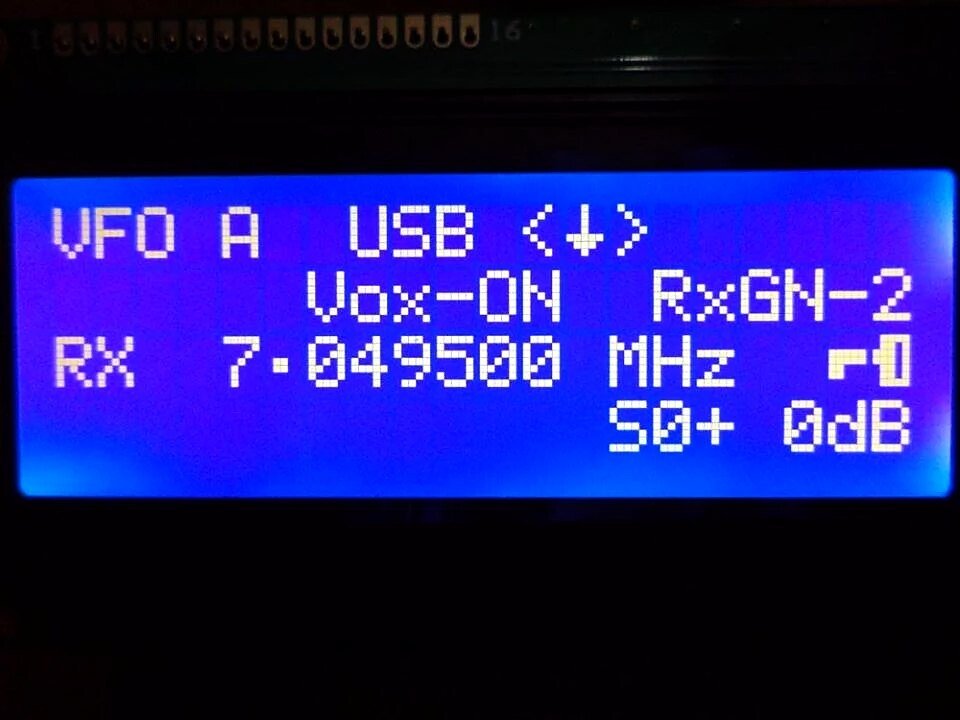
What the DDS VFO can do
01Tuning
- Dual VFO — VFO A, VFO B and A = B
- Variable-rate tuning, so a cheap mechanical encoder works well
- Step size selectable from 1 Hz up to the MHz range
- Fast up/down search in three user-selectable steps from the keypad
- RIT (receiver incremental tuning)
02Memory & scanning
- Up to 50 receive frequencies stored in memory
- VFO mode (encoder tunes) and memory mode (encoder picks a saved frequency), shown as VFO A/B or MEM on the LCD
- Copy VFO to memory, and memory back to VFO A or B
- Scan the VFO or scan the memories, with quick up/down search on PTT
03Receive & transmit
- AM, LSB, USB and CW, with PIC output pins for mode switching and LSB/USB/CW crystal switching
- CW offset added to the transmit frequency, so CW is not sent as modulated tone
- S-meter from S0 to S9 + 40 dB on a logarithmic scale
- 10 receive band-pass filters for 1.5–30 MHz, switched with 1 Hz selectivity in 1 ms — fast enough for cross-band operation
04Setup & flexibility
- Positive or negative IF offset — any value up to 999 MHz
- Display multiplier for use with VHF rigs
- Menu-driven setup screen; every setting, including DDS chip type and reference clock, can be changed while the VFO is running
- Time-out that ignores an unfinished setup entry, and auto-repeat on keys
Keypad frequency entry
Type the frequency in MHz on the keypad: * enters the decimal point and # confirms it. Starting with # enters a negative number — handy for IF offsets.
Seven extra push buttons handle the other functions, and the rest are built into the keypad itself.
Hardware
| Microcontroller | PIC16F877A |
|---|---|
| DDS chip | AD9851 or AD9850 (selectable in setup) |
| Controls | Rotary encoder, keypad and 7 push buttons |
| DDS PCB | Double-sided, plated-through FR4, 7.5 × 15 cm |
| Keypad PCB | Glass-epoxy, 6.5 × 13 cm |
| Enclosure | 1 mm mild steel, powder-coated, 17 × 7.5 × 14 cm (W × H × D) |
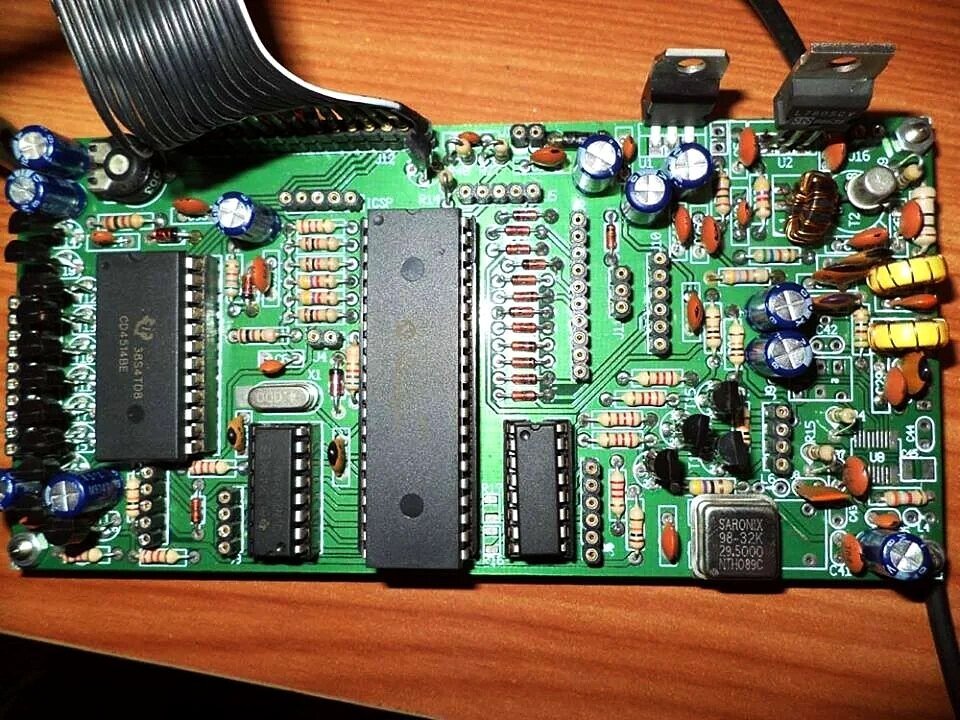
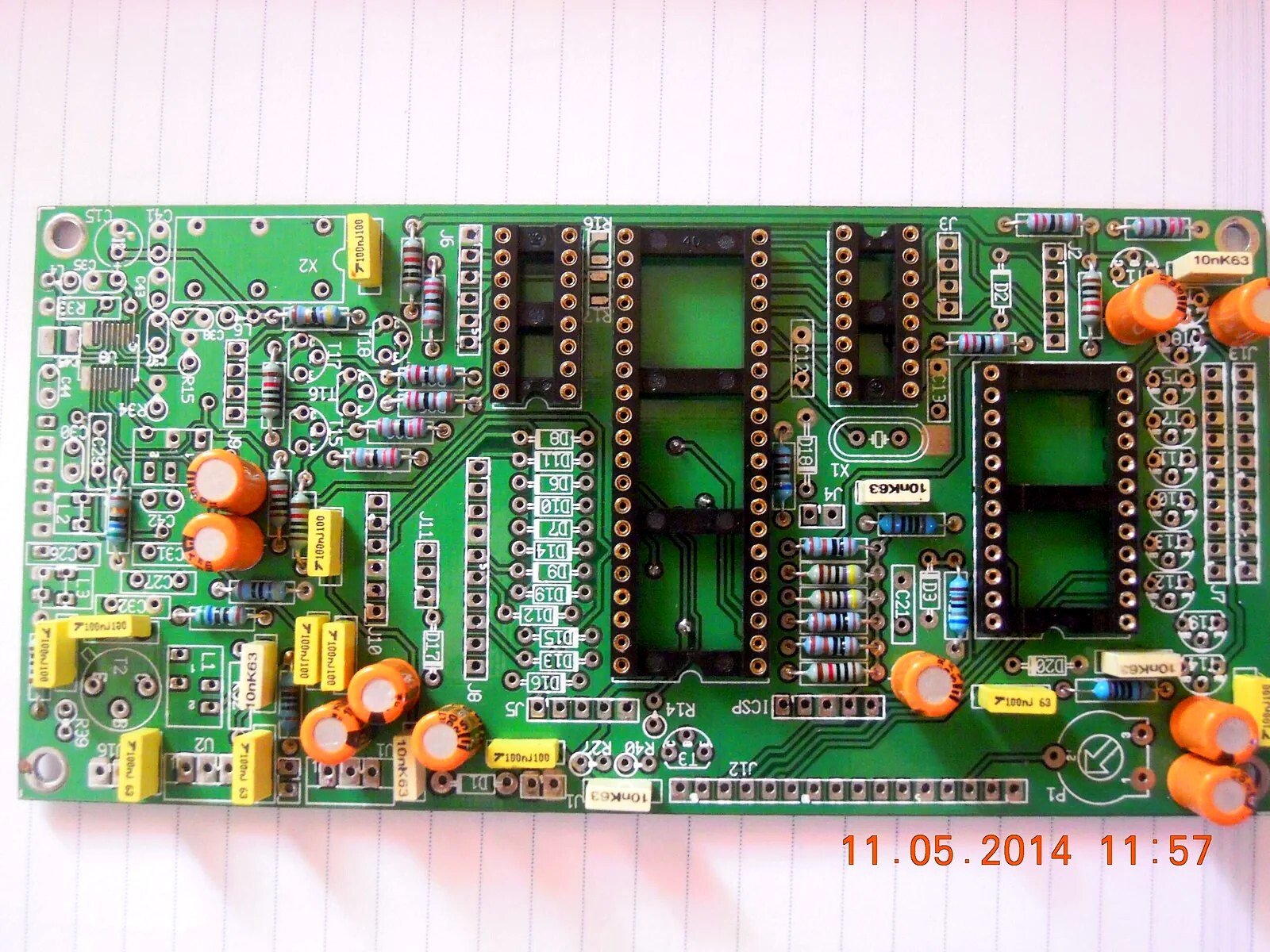
The DDS VFO boards
The controller board carries the PIC16F877A and the DDS chip; the second photo shows the board part-way through assembly, with the IC sockets still empty.
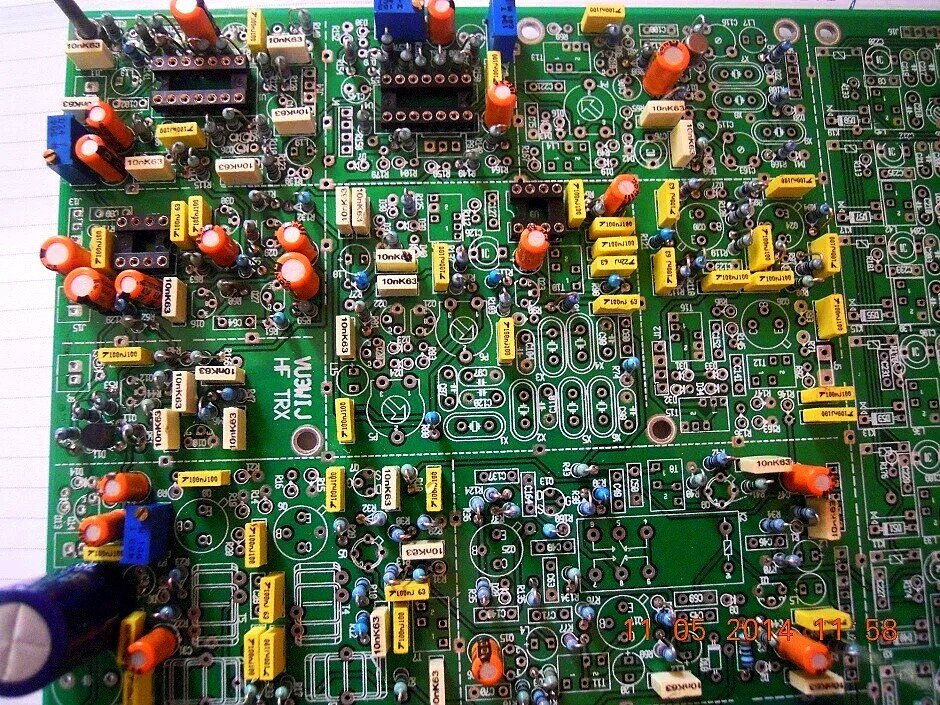
HF transceiver and SDR designs
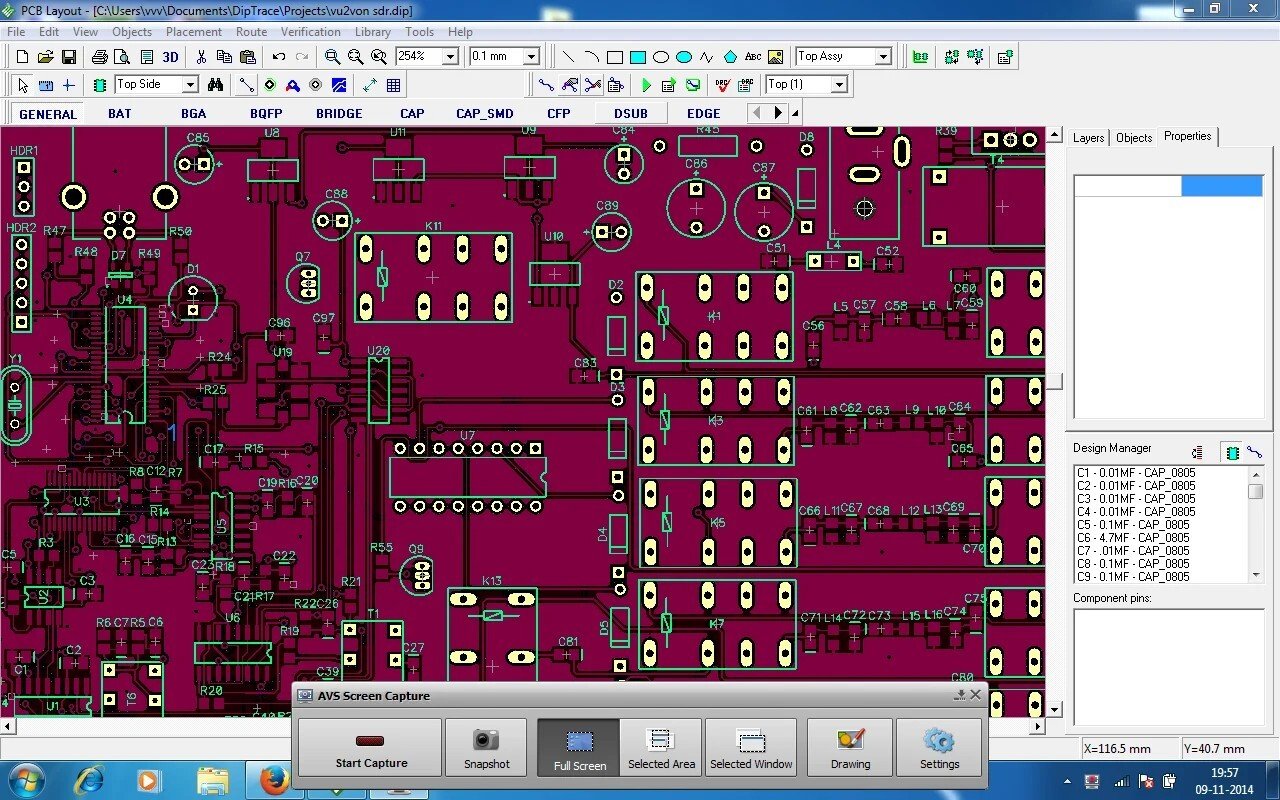
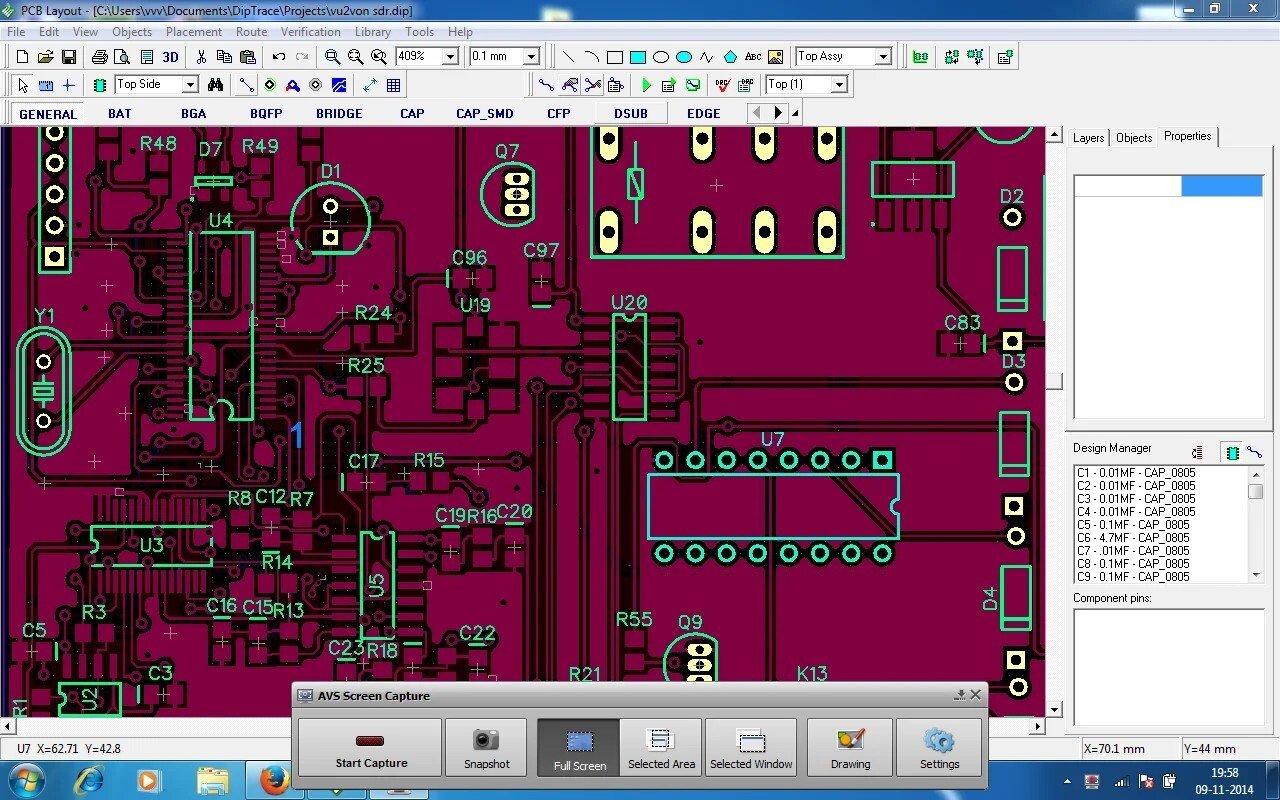
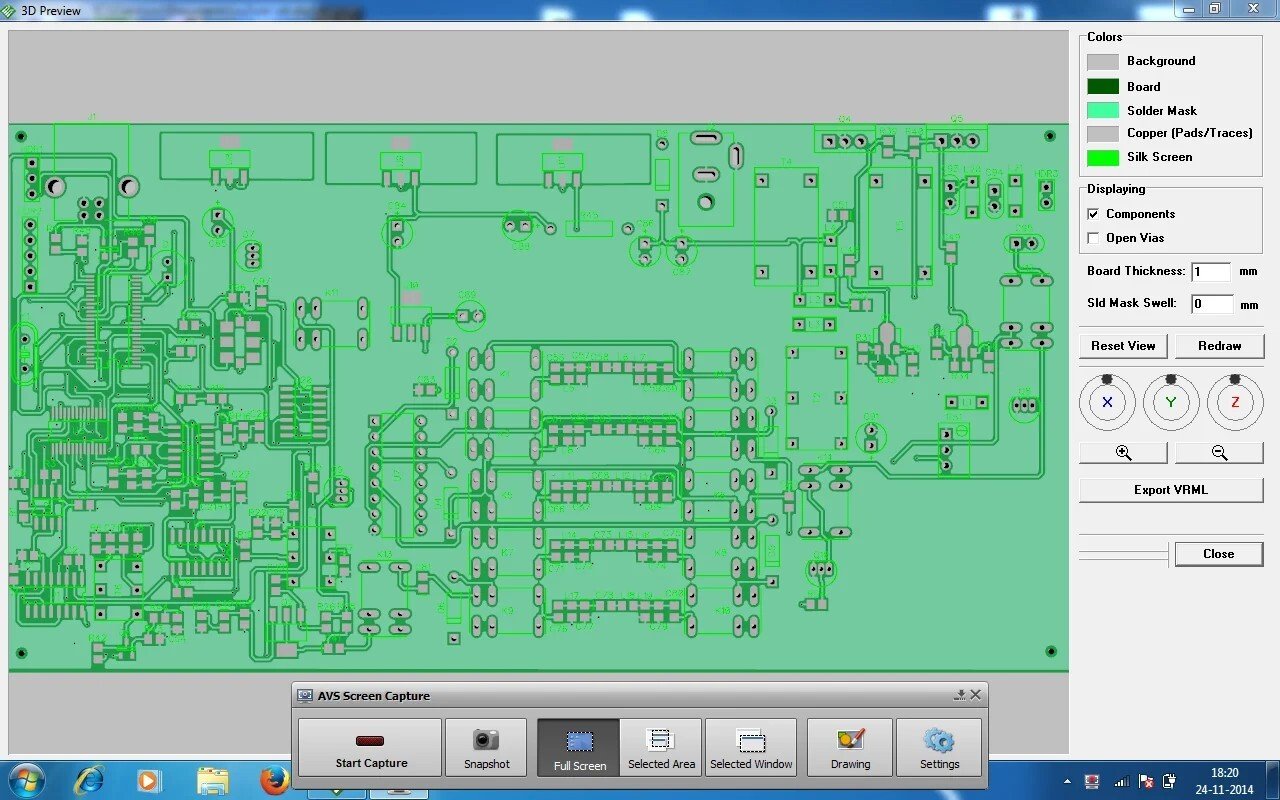
Alongside the VFO, VU2WJ built an HF all-band transceiver board and laid out an SDR transceiver PCB in PCB design software.
Parts for a GI-7BT valve amplifier
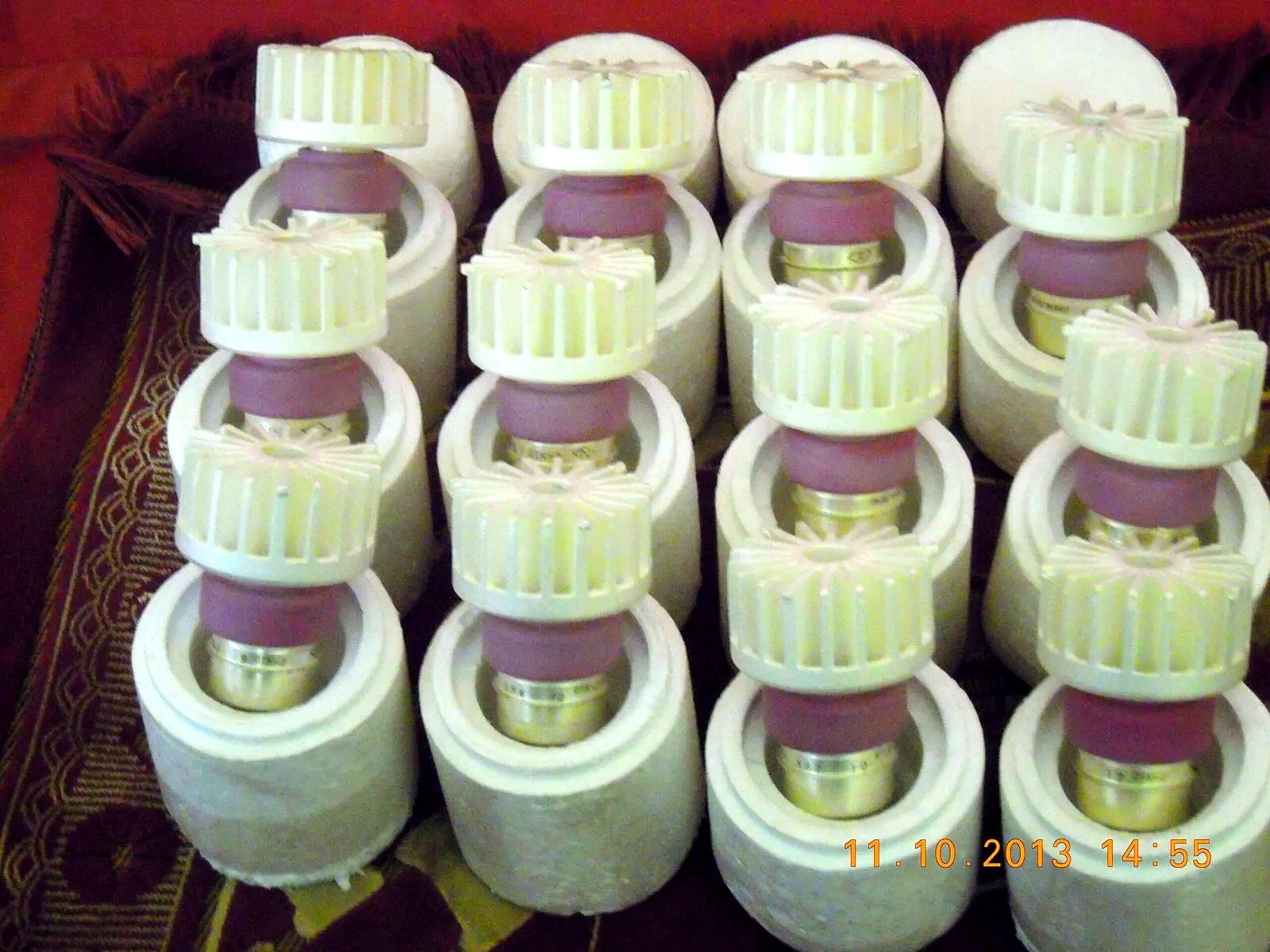
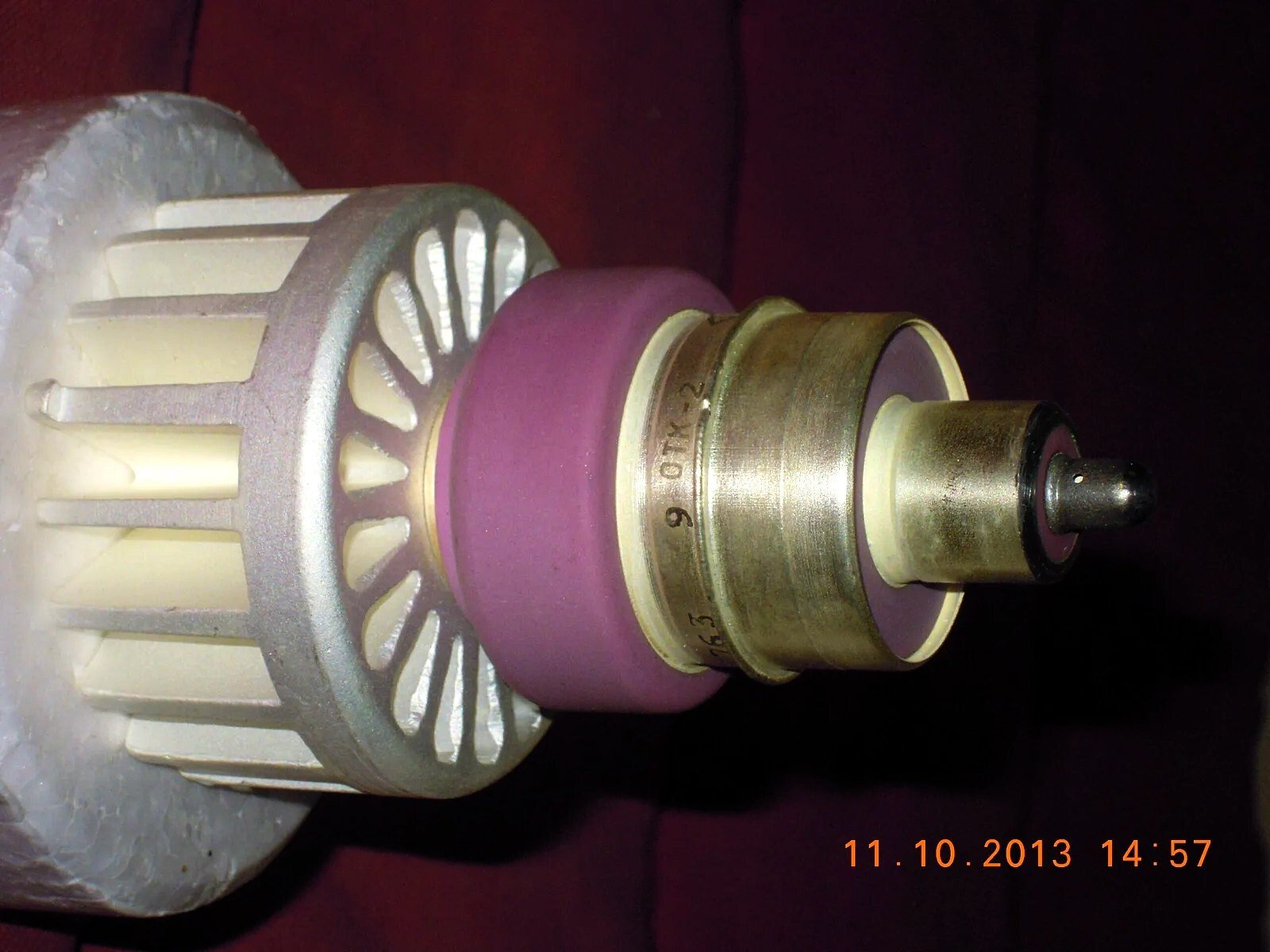
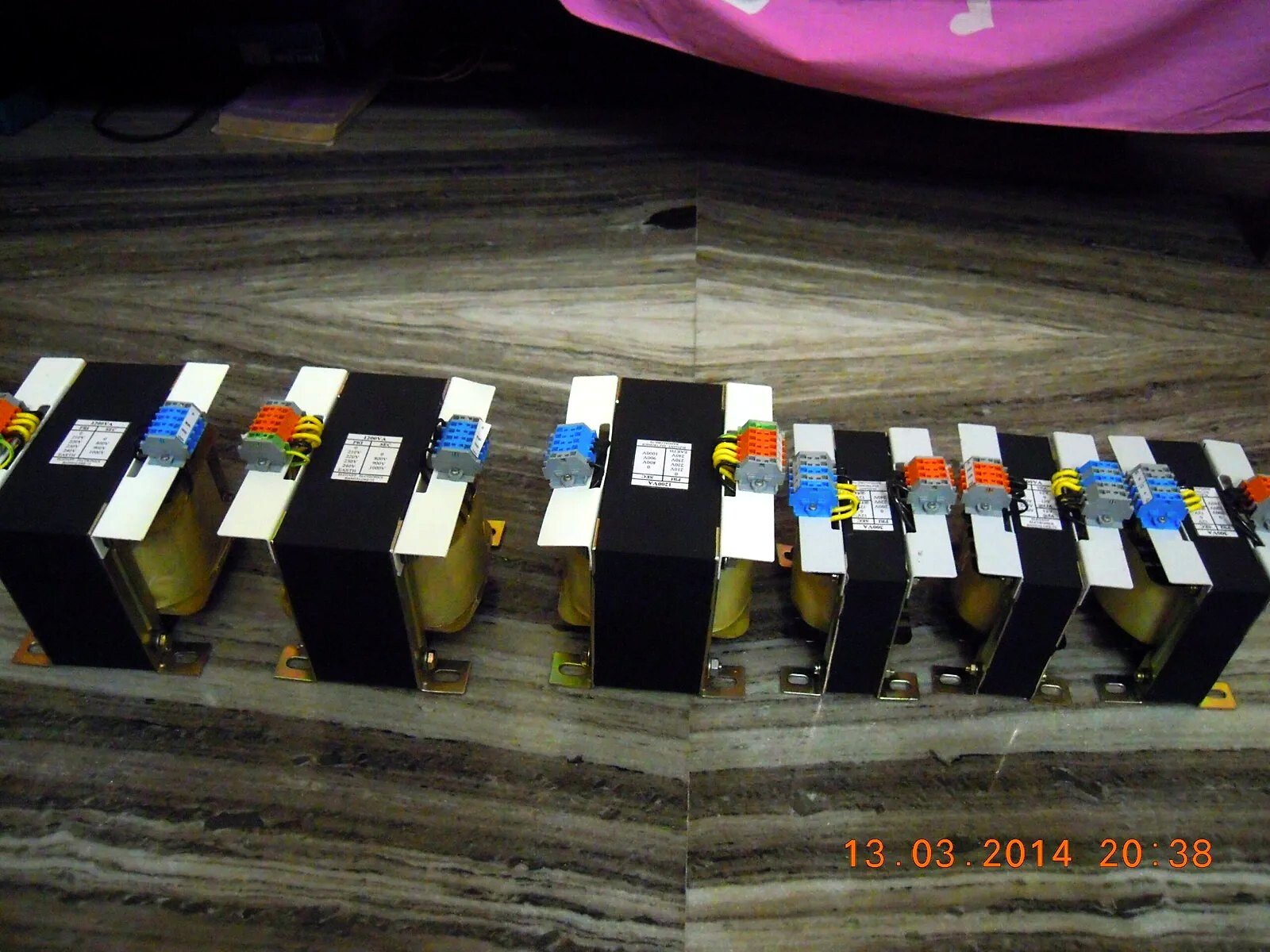
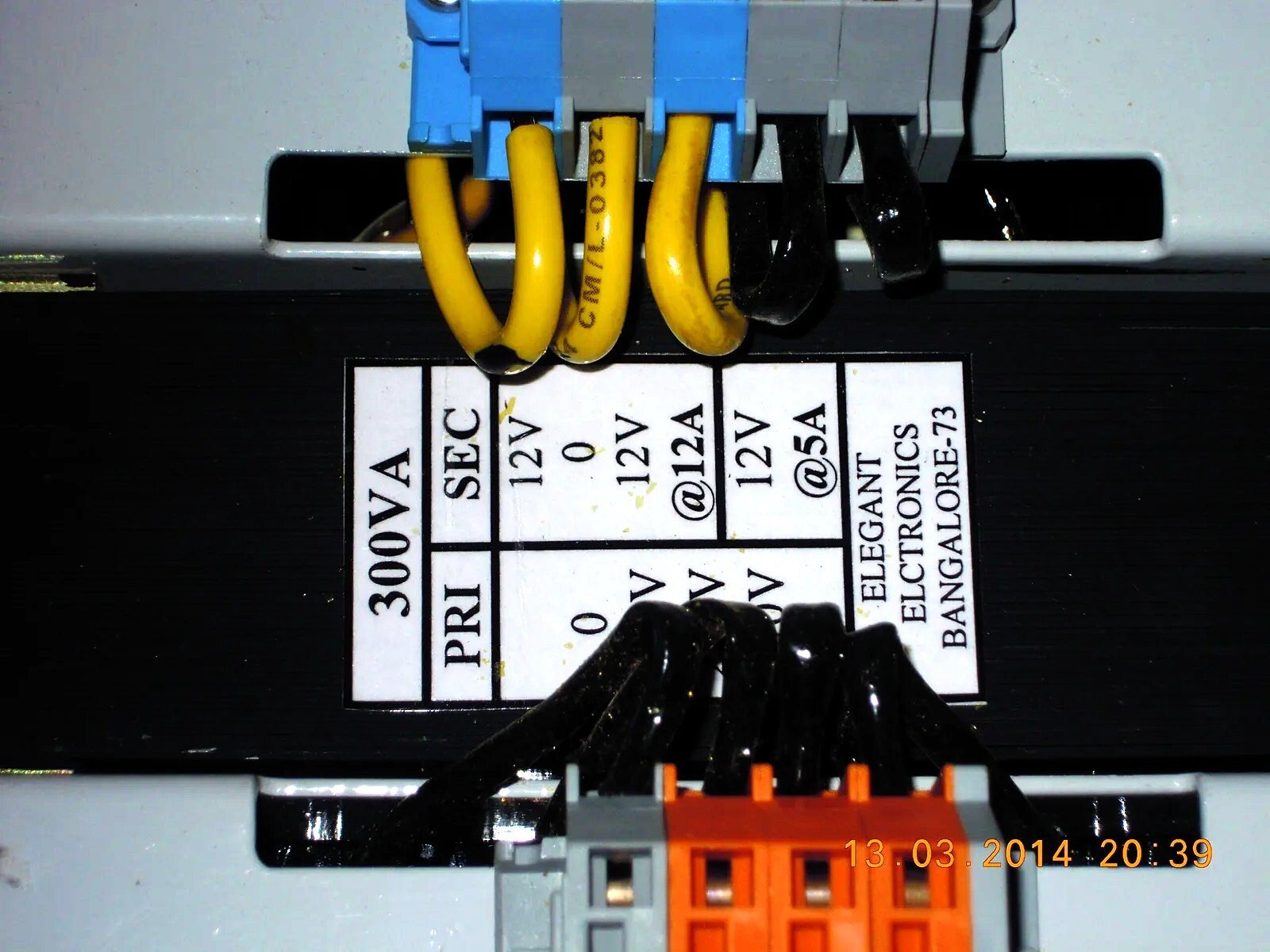
These photos of Russian GI-7BT ceramic transmitting tubes and the transformers for a valve HF linear amplifier came with the project photos. The original notes don't say whose amplifier build they belong to.
About this project
This is an archived project from 2013–14, kept here as a reference for homebrewers. Shaji P.B. now holds the callsign VU2WJ and is also credited on our Arduino band decoder. To ask about the DDS VFO, contact MARS and we'll pass your message on.